Content for LLMs is the text and data that AI tools like ChatGPT and Gemini scan when answering questions. If your pages are messy or scattered, these tools simply skip past them and pick clearer sources instead.
Learning how to structure content for LLMs starts with clear headings, short paragraphs, and direct answers near the top. Clean structure, stable schemas, and consistent messaging help AI tools find and trust your information fast.
Stick with us through this guide, and you will learn simple, beginner-friendly steps to format your content the right way. By the end, you will know exactly how AI tools read and cite your work.
What Does “LLM-Readable Content” Mean?
LLM-readable content is information written and formatted so AI tools can easily find, understand, and pull it into their answers. This ease of retrieval is called extractability, a key factor in AI visibility today.
An LLM, or Large Language Model, powers tools like ChatGPT, Gemini, and Perplexity. These AI-driven search engines read huge amounts of text and generate direct answers instead of listing links.
Machine readability means your content uses clear formatting that machines, not just humans, can scan easily. Short paragraphs, simple headings, and plain language help an AI model break your page apart and reuse it.
Traditional content often uses long intros and dense blocks of text built for slow reading. That style buries the answer, so LLMs struggle to pull clean facts and may skip your page entirely.
Key Techniques to Structure Content for LLMs Effectively
Some structuring techniques feel like pure magic once you see the results. A few small formatting changes can turn an ignored, invisible page into one AI tools quote again and again, almost overnight, without adding a single extra word.
1. Use Question-Based Content Structure (Primary Layer)
Question-based writing taps into how LLMs were actually trained. Massive datasets like SQuAD and Natural Questions taught these models to match questions with direct answers, so content shaped the same way feels familiar and easy to retrieve.
Start each section with a real question. Phrases like “What is”, “How to”, and “Why does” mirror how people search and how AI models were trained to respond. Keep one question per section, not several crammed together.
This approach also doubles as a natural FAQ structure. A local business page might use a heading like leaving multiple Google reviews to match real customer search intent and pull a clean retrieval match every time.
2. Lead With Direct Answers (Inverted Pyramid for LLMs)
Journalists have used the inverted pyramid for decades, and LLMs reward the exact same habit. Put your main answer in the first 40 to 80 words, before any backstory.
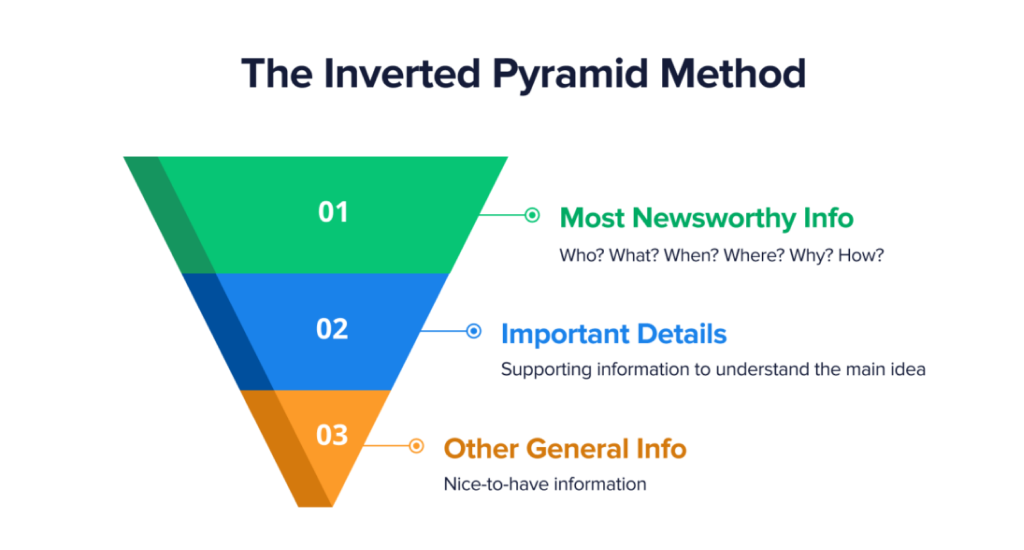
AI models often lean heavily on that first sentence when deciding what to extract. If your opening line is vague, the whole section risks getting skipped entirely.
Follow this flow:
- Answer first, stated plainly
- Explanation second, adding context
- Supporting details last, including examples or numbers
LLMs prioritize whatever sits at the top of a section, so burying your real answer under three sentences of fluff almost guarantees it gets ignored by retrieval systems searching for quick, citable facts.
3. Create Atomic Content Blocks (Chunk Engineering)
Chunking, sometimes called semantic chunking, is the process of breaking your page into small, meaningful pieces that an AI model can process on their own. Each chunk works almost like its own mini answer.
| Rule | Detail |
|---|---|
| One idea per section | Avoid mixing multiple topics together |
| Token range | Aim for roughly 80 to 200 tokens per chunk |
| Self-contained meaning | Each chunk should make sense without the rest of the page |
Behind the scenes, retrieval systems run something called chunk scoring, ranking how relevant and clear each piece is before selecting it. Poorly sized or vague chunks score lower, while clean, focused chunks get pulled into AI answers far more often.
4. Make Every Section Self-Contained and Context-Complete
Phrases like “as mentioned above” or “like we said earlier” might feel natural while writing, but they break everything for an AI model reading just one isolated chunk.
Avoid these habits:
- Referring back to earlier sections
- Using vague callbacks such as “the previous point”
- Assuming the reader already has context from elsewhere on the page
Every section needs to answer its own question completely, with no missing pieces. This connects to chunkability and context independence, ideas that decide whether a chunk can stand alone. When a section depends on something written earlier, retrieval systems often pull it out of order, leaving the AI confused.
5. Maintain Semantic Clarity and Entity Consistency
Entity clarity means an AI model always knows exactly who or what you are talking about. Semantic clarity goes a step further, making sure the meaning of every sentence stays sharp and unambiguous throughout the page.
Stick to one consistent term for each entity. If you call your product a “pressure washer” in paragraph one, do not switch to “cleaning machine” in paragraph three, since random synonym swaps confuse retrieval systems trying to match entities.
Watch out for vague pronouns like “it” or “they” when the subject is not crystal clear. Naming the subject directly, a practice called entity disambiguation, helps AI tools correctly identify what your content refers to.
6. Increase Factual Density (No Fluff Content)
Factual density measures how much real, useful information sits inside a section compared to filler words. Higher density means an AI model gets more value from every sentence.
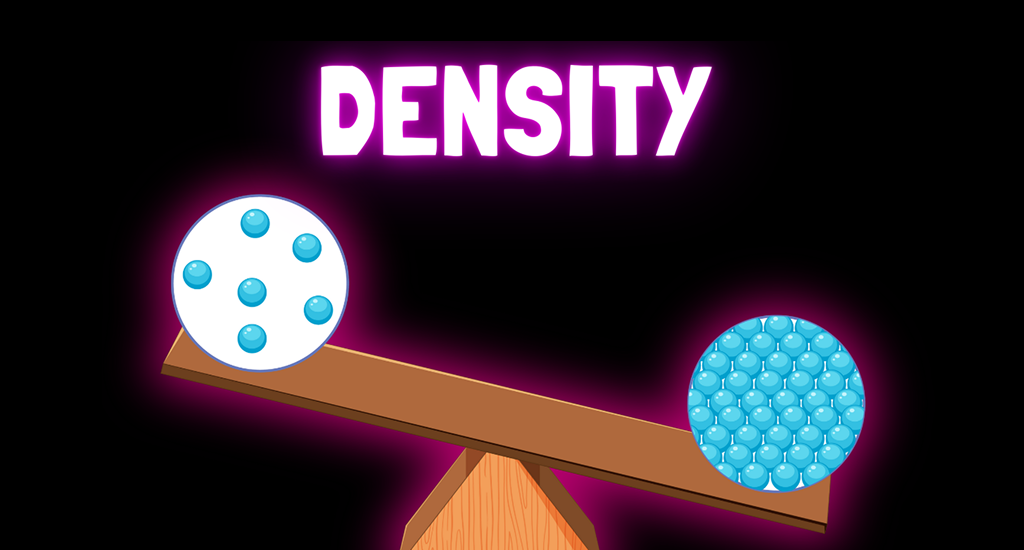
Pack each section with:
- Clear definitions
- Specific examples
- Real numbers or statistics
- Practical use cases readers can act on
Skip the storytelling fluff, like long personal anecdotes, before getting to the point. A section on dealing with negative reviews works far better with exact response templates than with a vague story about a bad experience.
This connects to information gain, meaning your content should add something new that the model has not already seen, rather than repeating common knowledge in different words.
7. Add Fact Layers and Summary Statements in Sections
“In summary, this product works best for outdoor concrete surfaces.” Small recap lines like that do more work than people realize when it comes to AI retrieval.
Adding short summary statements throughout your content, using phrases like “In summary” or “This means,” gives AI models a second, clearer pass at your main point. It is almost like restating the answer in plain words right after explaining it in detail.
These fact layers serve two purposes. First, they reinforce meaning, making it harder for an AI model to misread or hallucinate your content. Second, they raise extraction confidence, since a repeated fact is more likely to be trusted and cited accurately.
8. Use Structured Formatting (Lists, Tables, and Steps)
Plain paragraphs ask AI models to do extra work, scanning line by line just to find one usable fact. Structured formats skip that step entirely and hand the answer over directly.
| Format | Best Used For |
|---|---|
| Bullet points | Quick lists of features or tips |
| Numbered lists | Ranked items or sequential steps |
| Tables | Comparisons and data-heavy facts |
| Step-by-step guides | Processes and how-to instructions |
Structured data consistently earns higher citability than plain text, since AI tools can lift a single row, bullet, or step without interpreting surrounding sentences. Next time you are tempted to write one long paragraph, ask whether a table or list would work better.
9. Follow a Predictable Content Pattern (Template-Based Writing)
AI models process familiar patterns faster than random, unpredictable layouts. Once a model learns your typical section pattern, it can parse the rest of your page with far less effort.
A reliable template looks like this:
- Question
- Direct answer
- Key supporting points
- Real-world example
- Supporting data or numbers
Repeating this same flow across every section creates structural predictability. The model learns the shape of your content after the first section, then applies that expectation to everything that follows. Pages that jump between formats slow down parsing and increase the chance of an AI tool skipping a section.
10. Optimize for Extractability and Citability
By now, extractability and citability might sound familiar, but here is the practical side. Extractability is how easily a model can lift one clean fact from your page, while citability is how quotable that fact actually is once pulled.
Both improve fastest when you lean on:
- Clear definitions stated in one sentence
- Numbered or bulleted lists
- Comparison of data tables
- FAQ sections answering exact user questions
Every one of these formats raises citation probability, the rough chance an AI tool will reference your page instead of a competitor’s. Content buried in long, unstructured paragraphs rarely gets cited, since the model cannot isolate a clean, quotable piece quickly enough.
11. Match Content With User Query Intent (Retrieval Optimization)
Retrieval match happens when your wording lines up with what someone actually typed or asked an AI assistant. The closer that match, the more likely your content is to get pulled into the response.
Query expansion makes this trickier, since AI tools test several phrasings of the same question before retrieving results. Covering natural variations inside your content helps catch all of them, not just your original exact phrase.
Try including:
- Synonyms for your keyword
- Realistic question variations
- Related phrases people search alongside your topic
Aligning a heading with a real search query, something like measure local search CTR, makes retrieval match far more reliable than a vague label.
12. Use Internal Linking to Build a Semantic Network
Search engines and AI models both build something close to a knowledge graph in the background, mapping how different pages, topics, and entities relate to each other across your entire site. Internal linking feeds that map directly.
Every link between related pages strengthens what is essentially a semantic graph, helping AI tools understand that two topics belong together logically. Stronger entity relationships mean a model trusts your site as one coherent source, not a pile of disconnected articles.
Skip generic anchor text like “click here” or “read more.” Use contextual anchors instead, descriptive phrases that tell readers and AI tools exactly what the linked page covers before they click through.
13. Add Schema Markup for Machine Readability
Schema markup is basically a translator, written in a format called JSON-LD, that explains your content to machines in a language they understand instantly, without guessing or interpreting context.
Different schema types serve different purposes:
| Schema Type | Best For |
|---|---|
| FAQPage | Question and answer sections |
| HowTo | Step-by-step instructions |
| Article | Blog posts and news content |
| DefinedTerm | Glossary terms and definitions |
Adding the right schema tells an AI model exactly what kind of content it is looking at before reading a single sentence. This dramatically improves machine understanding, cutting misinterpretation and helping your page get pulled into the correct type of AI-generated answer.
14. Build Authority Signals (E-E-A-T for AI + SEO)
AI models lean toward sources that already look trustworthy to humans, which makes E-E-A-T just as relevant for AI search as it always has been for traditional Google rankings.
Strengthen your authority with:
- Credible, citable sources backing up your claims
- Real expert quotes from people with relevant experience
- Original research, surveys, or firsthand data nobody else has published
Building topical authority across a cluster of related pages, instead of one isolated article, signals that your site deeply understands the subject. These trust signals grow stronger when paired with external linking to respected sources, showing AI models your claims are backed by more than opinion.
15. Use FAQs, Glossaries, and How-To Sections
Some formats consistently outperform others when it comes to getting picked up by AI tools, and these three sit at the very top of that list for good reason.
| Format | Why It Works |
|---|---|
| FAQs | Retrieval-friendly, matching real questions directly |
| Glossary | Provides clean entity definitions AI models can trust |
| How-to guides | Delivers procedural answers in clear, ordered steps |
FAQs work well because they mirror the exact question and answer pattern AI models were trained on. Glossaries give your site a stable home for entity definitions, helping the semantic clarity covered earlier. How-to guides package step-by-step processes in a format built for extraction.
16. Use TL;DR Summaries to Improve AI Extraction
TL;DR: A short summary box at the top or bottom of your page can dramatically boost how often AI tools pull from it. That single sentence basically demonstrates the entire technique.
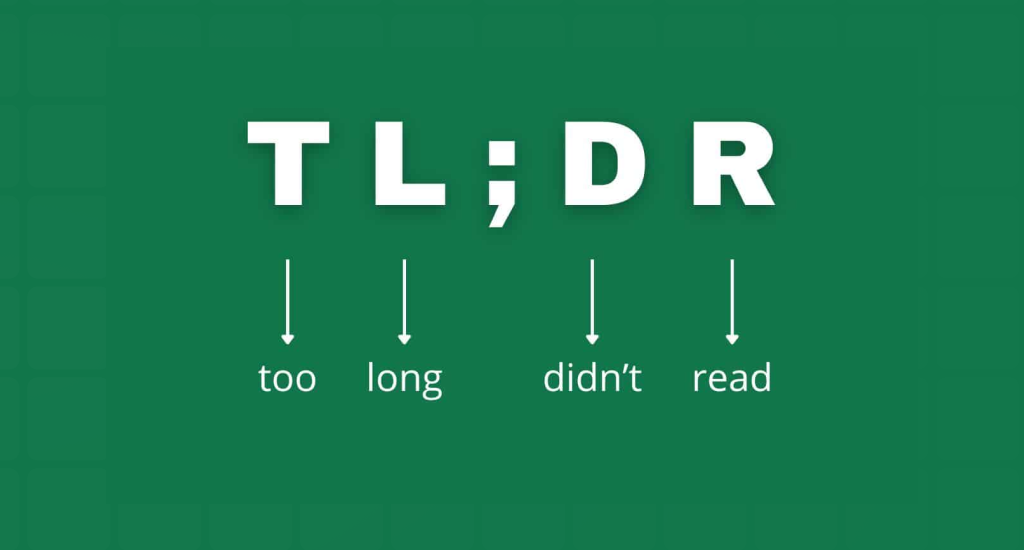
Place your TL;DR right after the introduction or right before the final thoughts, wherever it feels least disruptive to a human reader scrolling through the page.
Its real purpose is quick extraction. Instead of working through several paragraphs, an AI model can grab one tight, compressed sentence and move on. This feeds directly into tools like AI Overviews, which favor content already packaged in a clean, summarized form.
Common Mistakes to Avoid When Structuring Content for LLMs
Many writers make small structuring mistakes that block AI tools from reading their content properly. Avoiding these mistakes helps your pages become more extractable and trustworthy for LLMs.
Long Paragraphs
Long paragraphs bury the answer under too much text, making it hard for AI tools to find the key point. Keep paragraphs short so each one delivers one clear thought.
Mixed Topics in One Section
When one section covers several unrelated ideas, AI tools struggle to pull a single clean answer from it. Stick to one topic per section so each part stays focused and clear.
Ambiguous Writing
Vague phrases and unclear pronouns confuse AI models just like they confuse human readers. Use specific words and name your subject clearly so LLMs can pull exact, correct facts every time.
No Structure
Pages without headings, lists, or clear sections look like one long wall of text to an AI tool. Add headings, bullet points, and short sections so the model can scan and locate answers fast.
Inconsistent Terminology
Switching between different terms for the same thing, like calling it SEO content in one spot and AI content in another, confuses AI tools. Stick to one consistent term throughout your page.
Ignoring Schema Markup
Schema markup gives AI tools extra context about your content, like what type of page it is and what it covers. Skipping schema makes your page harder for LLMs to classify and trust.
No Factual Depth
Thin content without real facts, numbers, or examples gives AI tools little to cite. Add specific details, original data, or clear examples so your page becomes a trustworthy source LLMs want to reference.
How Do LLMs Read, Retrieve, and Extract Content? (RAG + Extractability Explained)
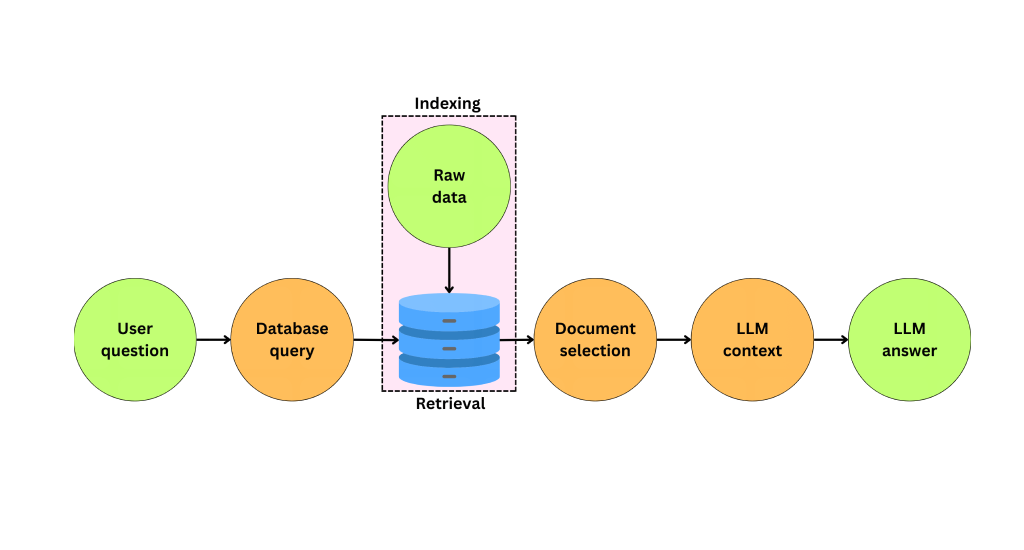
LLMs do not simply scan a page top to bottom. They use RAG, or Retrieval Augmented Generation, a method that finds relevant pieces of content from across the web and uses them to build an accurate answer.
The Core RAG Process
Once a question comes in, the LLM works through five clear steps to build its answer:
| Step | What Happens |
|---|---|
| Chunking | Content is split into small, standalone units |
| Embedding (vector search) | Each chunk is converted into a searchable vector |
| Retrieval (passage retrieval) | The most relevant chunks are selected for the query |
| Context Packing (context window) | A limited number of chunks are combined together |
| Answer Generation | The final response is written using the packed chunks |
LLMs Retrieve Chunks, Not Full Pages
This is the most important takeaway. LLMs never read your entire page at once. They pull small, specific chunks, so each section of your content needs to stand on its own and make sense alone.
What Makes Content Easy to Retrieve and Cite
Four qualities decide whether AI tools can use your content at all:
| Term | What It Means |
|---|---|
| Extractability | How easily AI can pull a specific answer from your text |
| Citability | Whether your content is structured for quoting, like lists and definitions |
| Parseability | How clean and machine-readable your formatting is |
| Chunkability | Whether each section works well on its own |
Best Practices for Retrieval
To make your content RAG-friendly, follow these core habits:
- Write self-contained sections that make sense without reading the whole page
- Use a clear HTML structure with proper headings, lists, and tables
- Keep your formatting clean, consistent, and free of clutter
What to Avoid
Certain formats and layouts block AI tools completely, so skip these:
- PDFs or image-based content that AI tools cannot easily read
- Messy layouts with no clear hierarchy
- Multi-column designs that confuse text order
LLMs also use query rewriting, also called query expansion, to match your content with different versions of a search. Structured formatting makes this matching far more accurate, helping your page get found and quoted more often.
Why Content Structure Matters for AI Search and GEO
Content structure now decides more than just your Google ranking. It also decides whether AI tools quote, mention, or completely skip your page when answering real questions, making structure more important than ever before.
- Traditional SEO vs GEO: Traditional SEO targets search rankings, while GEO focuses on getting content quoted inside AI-generated answers.
- AI Citation Systems: AI citation systems decide which sources get credited or linked when an AI tool answers a question.
- Extractability Importance: Extractability determines whether AI tools can easily pull your facts, making it essential for visibility today.
- AI Visibility: AI visibility means how often your brand or content appears inside AI-generated answers and summaries.
- Citation Probability: Citation probability is the likelihood that an AI tool will quote or reference your specific page or content.
- Key Takeaway: Good structure now drives both traditional rankings and AI citations, making it your most valuable SEO skill.
Conclusion
At this point, you know that structure beats length, and clarity beats creativity. Learning how to structure content for LLMs matters more than writing longer pages or clever, fancy phrasing that AI tools cannot easily use.
Going forward, optimize every page for clear chunks, strong entities, and easy extraction. As AI search and GEO keep growing, this simple shift will keep your content visible, trusted, and frequently cited.