Search results changed fast after Google added AI answers at the top of many pages. These summaries appear before normal links. Website owners now want clear data about their presence inside these AI results.
Many SEO tools still focus on normal rankings and ignore this new search area. That gap creates confusion for marketers and site owners. AI overviews tracking tools such as Otterly.ai, SE Ranking, and Keyword.com now help track these AI answers clearly.
Well, this blog lists the best Google AI overview tracker tools you can use today. Read the guide to see which options work well.
First, Clean Your Confusion About the Google AI Overviews
Google AI Overviews appear at the top of many search pages and show a short answer. This answer comes from artificial intelligence. The system reads many web pages and creates one clear summary.
Google first tested this feature under the name Search Generative Experience. The company later changed the name to AI Overviews. You now see this section above normal search results on many information searches.
The AI system studies several web pages and then writes a short answer for the user. This summary appears before normal blue links on the results page. Many site owners now track this area through AI overviews rank tracking online tools.
How AI Overviews Show Up in Search Results
AI Overviews appear when Google believes a quick summary helps the searcher. Long questions and natural language searches often trigger this result type. Informational queries dominate this feature and cover close to eighty-eight percent of cases.
Each overview usually cites several web pages as supporting sources. Most summaries include six to fourteen links. Many studies show an average of about eight sources inside one overview result.
AI Overviews vs Featured Snippets
Featured snippets show a short text block from a single website. This is one of the best uses of AI for local businesses. Google selects one page and places that answer above the search results.
AI Overviews work in a different way. The system builds a new summary and pulls ideas from many sources. Several websites receive citations inside the answer.
AI Overviews vs Organic Results
Organic results show normal website links ranked by Google’s search system. These links appear under the AI overview section on the page.
The AI overview section sits above those links and takes the highest space. This position often pushes the traditional number one result lower on the screen.
AI Overviews vs Paid Ads
Paid ads appear when a company pays Google for visibility on certain searches. These ads include a small label that shows they are sponsored content.
AI Overviews do not work as advertisements. The system selects source pages through its AI model and search signals instead of payment.
Why AI Overviews Change Position #1
The traditional number one ranking once brought the closest attention on Google search pages. AI Overviews now take that top visual space for many informational searches.
Users often read the summary and leave without visiting another page. This pattern creates a zero-click search behavior. Because of this shift, many marketers now rely on a rank tracking tool to analyze data to measure visibility inside these summaries.
Best AI Overviews Tracking Tools: At A Glance
Many tools promise AI overview insights, yet their capabilities differ widely. A quick comparison helps readers spot key strengths faster. Check the table below to see how these fifteen tools compare.
| Tool | Best for | AI-only Tracking | Citation Tracking | Multi-Engine |
|---|---|---|---|---|
| Otterly.ai | AI search visibility | Yes | Yes | Yes |
| SE Ranking | All-in-one SEO platform | No | Limited | Limited |
| Keyword.com | Rank tracking accuracy | No | Yes | Limited |
| Peec AI | Multi-AI prompt tracking | Yes | Yes | Yes |
| AccuRanker | Fast keyword tracking | No | Limited | No |
| Rankscale.ai | AI brand visibility | Yes | Yes | Yes |
| seoClarity (ArcAI) | Enterprise AI analysis | Yes | Yes | Yes |
| Semrush (AI Toolkit) | Marketing ecosystem | No | Yes | Limited |
| Advanced Web Ranking | Agency rank tracking | No | Limited | No |
| Nightwatch | SERP feature tracking | No | Limited | No |
| Profound AI | AI brand monitoring | Yes | Yes | Yes |
| Ahrefs Brand Radar | Brand mentions in AI | Yes | Yes | Yes |
| ZipTie.dev | Developer AI tracking | Yes | Yes | Yes |
| GetMint | AI content visibility | Yes | Yes | Yes |
| SEOMonitor | Forecast-driven SEO | No | Limited | No |
15 Best AI Overviews Tracking Tools
Many tools now claim support for AI overview data, yet several platforms still provide weak or confusing insights. Reliable options such as Otterly.ai, SE Ranking, and Keyword.com stand out among many low-quality tools online.
The right choice matters because poor tracking data can mislead SEO decisions. Below, you will see fifteen carefully selected tools that help monitor AI search visibility with stronger data accuracy and useful reporting features.
Also read: Best AI Marketing Strategies for Local Business.
1. Otterly.ai
- Best for: Brands and SEO teams that want dedicated AI search visibility tracking.
- Features:
-
-
- Best solutions for Google AI overview tracking
- ChatGPT, Perplexity, and Copilot monitoring
- Brand visibility index and sentiment tracking
- Citation and link analysis
- GEO audits and prompt monitoring
-
- Limitations:
-
- Prompt limits on lower plans
- Add-ons required for some AI engines
- Pricing: Lite plan about $29/month, Standard about $189/month, Premium about $489/month.
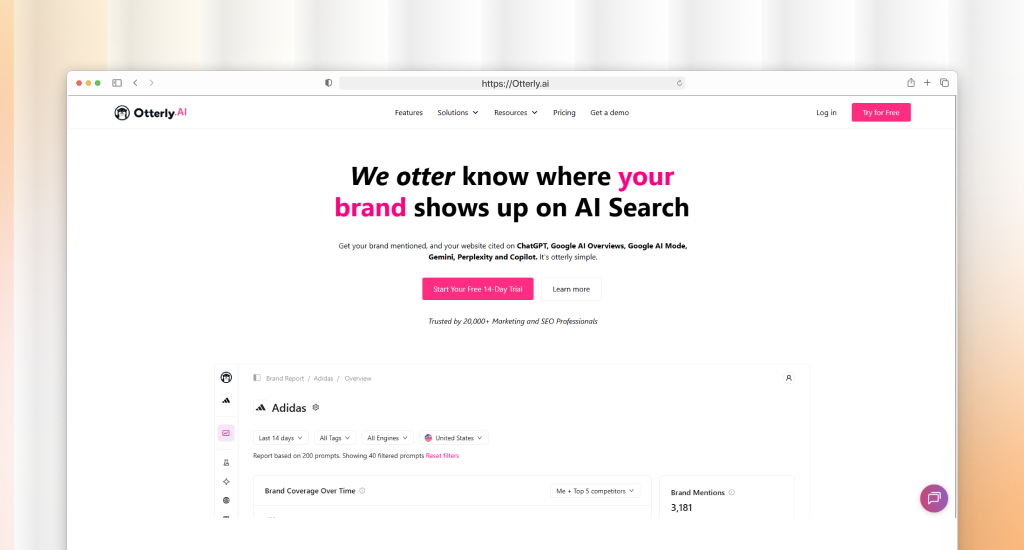
Otterly focuses on visibility inside modern AI search systems instead of traditional keyword ranking alone. The platform monitors brand mentions and source citations across AI answers produced by Google, ChatGPT, and other engines.
The dashboard also highlights citation sources and brand sentiment patterns. This helps marketers see how AI systems describe their brand and which websites influence AI summaries.
2. SE Ranking
- Best for: Agencies and SEO teams that need an all-in-one SEO platform with AI visibility tracking.
- Features:
-
-
- Keyword rank tracking with daily updates
- AI search visibility monitoring
- Site audits and backlink analysis
- Competitor tracking and keyword research
- White-label reporting for agencies
-
- Limitations:
-
- AI tracking often requires an add-on
- Backlink database smaller than some competitors
- Pricing: Core plan starts at about $103/month, Growth at about $223/month, and Enterprise custom pricing.
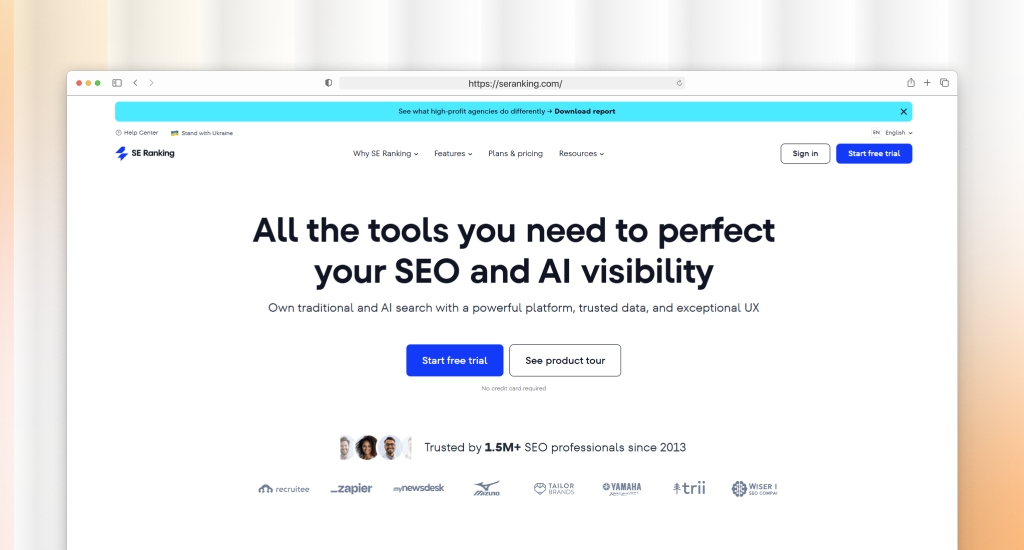
SE Ranking works as a full SEO toolkit that includes AI search monitoring features. Many agencies prefer this platform because it combines rank tracking, technical audits, and competitor research in one dashboard.
The platform tracks keyword positions, SERP features, and AI-driven search visibility across multiple markets. Its reports and client dashboards also help agencies manage many websites at the same time.
3. Keyword.com
- Best for: Teams that need accurate keyword and AI overview rank tracking with simple dashboards.
- Features:
-
-
- Google AI Overviews monitoring
- SERP history and share of voice analysis
- AI visibility tracking across several engines
- Competitor benchmarking and citation analysis
- API and CSV export support
-
- Limitations:
-
-
- Focus mainly on rank tracking
- Advanced AI features require extra credits
-
- Pricing:
-
- Business plan starts around $3/month for basic tracking.
- AI visibility features available as add-ons or usage-based plans.
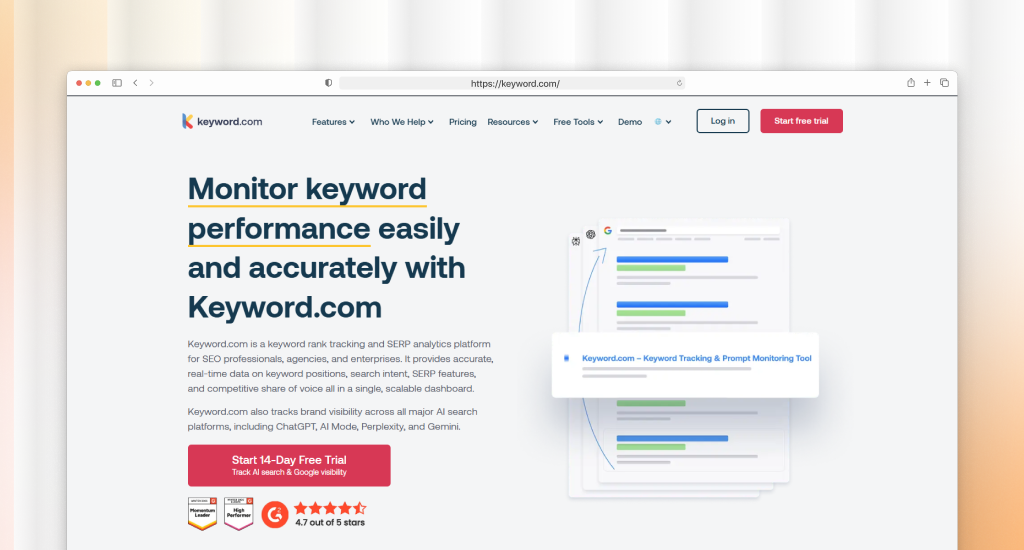
Keyword.com focuses strongly on accurate ranking data. The platform frequently checks keyword positions and detects when Google displays AI Overviews for specific queries.
The system also tracks source citations, share of voice, and sentiment across AI responses. These insights help marketers understand how AI answers affect their search visibility.
4. Peec AI
- Best for: Marketing teams that want deep visibility across multiple AI search platforms.
- Features:
-
-
- AI visibility tracking across ChatGPT, Perplexity, and Google AI Overviews
- Prompt monitoring across several AI models
- Brand mention and citation analysis
- Multi-country tracking with unlimited seats
- AI answer analytics and reporting
-
- Limitations:
-
- Lower plans track only a limited number of prompts
- Some AI engines require paid add-ons
- Pricing: Starter is about $95/month, Pro is about $245/month, and Enterprise is a custom plan.
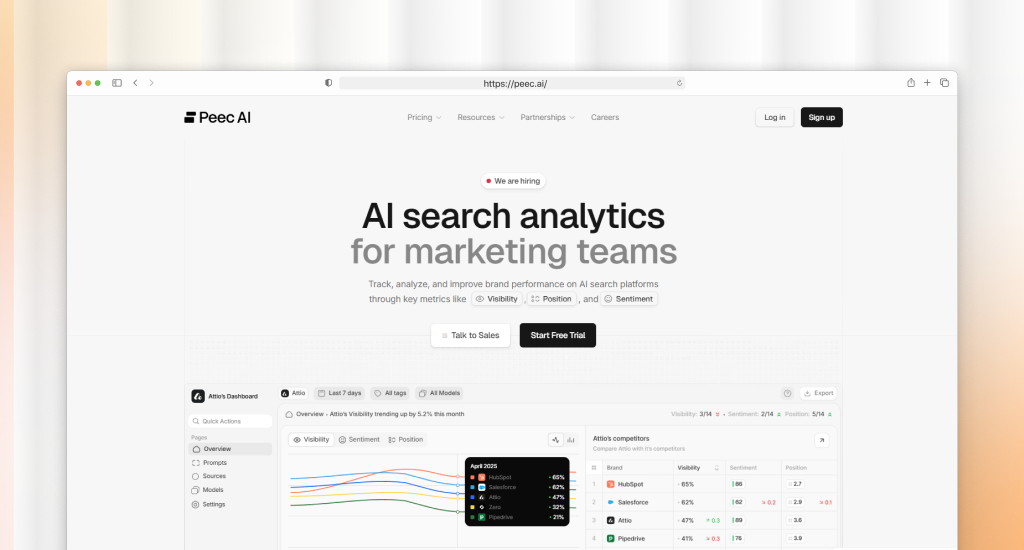
Peec AI focuses on visibility inside AI answers rather than traditional keyword ranking. The system analyzes prompts across several models and records how often a brand appears in generated responses.
The dashboard highlights citation sources and prompt patterns that influence AI responses. These insights help marketing teams adjust content strategy so their pages appear more often in AI search summaries.
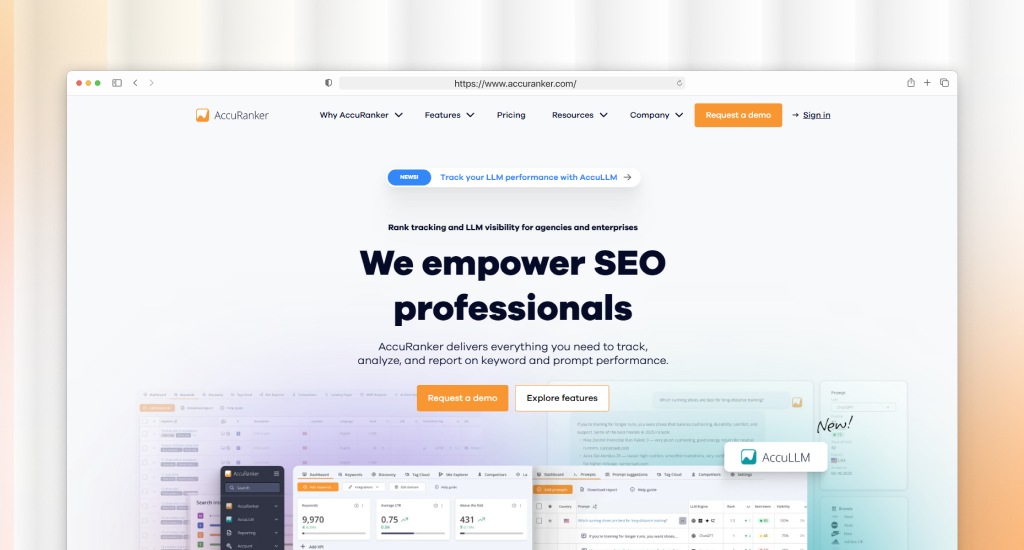
5. AccuRanker
- Best for: Agencies that need highly accurate keyword tracking with advanced SERP data.
- Features:
-
-
- Daily keyword ranking updates
- SERP feature tracking, including AI search signals
- Competitor comparison and Share of Voice metrics
- API integrations and data export
- Google Analytics and Search Console connections
-
- Limitations:
-
- Pricing is higher than that of many SEO tools
- Focus remains mainly on keyword tracking rather than full AI visibility analysis
- Pricing: Professional plan starts around $224/month for about 2,000 tracked keywords.
AccuRanker built its reputation through fast and reliable keyword tracking. Many agencies prefer the platform because ranking updates arrive daily and dashboards present data in a clean format.
The platform also tracks SERP features and competitor rankings across markets. These insights help SEO teams understand how search result changes affect website visibility and market share.
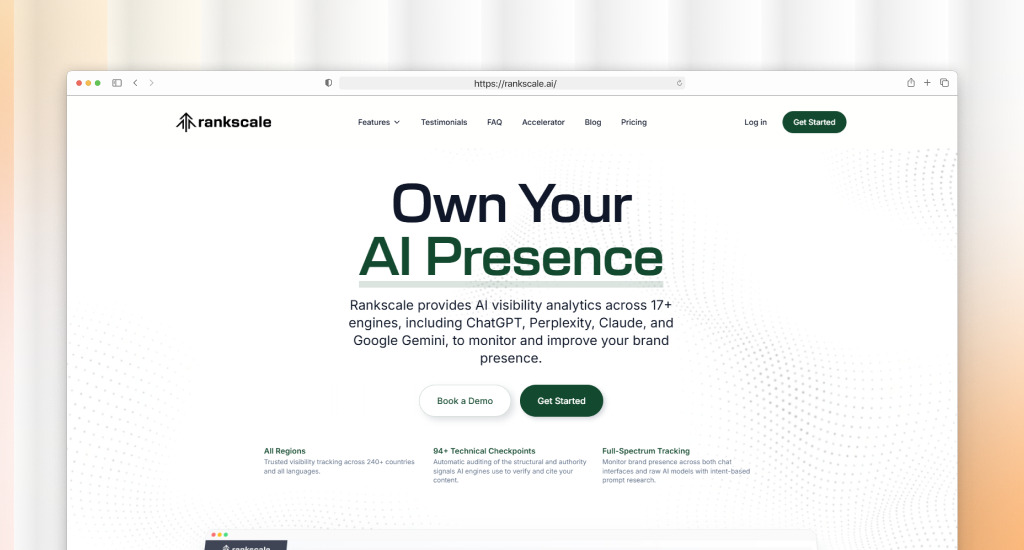
6. Rankscale.ai
- Best for: Teams that want multi-engine AI visibility tracking with flexible pricing.
- Features:
-
-
- Tracking across ChatGPT, Perplexity, Claude, and Google AI Overviews
- Citation and entity analysis in AI responses
- Brand visibility dashboards and competitor benchmarking
- AI readiness audits and content recommendations
- Exportable data and interactive dashboards
-
- Limitations:
-
- A credit-based system may increase costs for heavy usage
- The interface may require time for beginners to learn
- Pricing: Essential plan about $20/month, Pro about $99/month, Enterprise about $780/month.
Rankscale.ai focuses strongly on brand visibility inside AI search systems. The platform tracks how different models mention a company and which pages appear as supporting sources.
Besides, this tool evaluates website readiness for AI search engines through audits and visibility scores. These insights help marketers improve content so AI systems cite their pages more frequently.
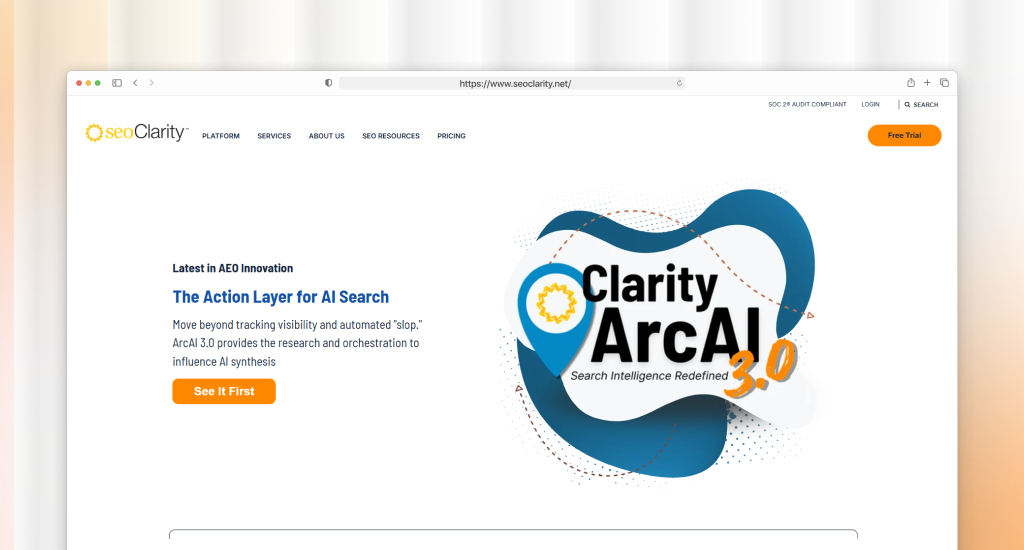
7. seoClarity (ArcAI)
- Best for: Large SEO teams that need enterprise-level AI search visibility analysis.
- Features:
-
-
- AI Overview visibility tracking
- LLM citation and brand mention monitoring
- SERP feature and keyword tracking
- Competitor AI exposure reports
- Enterprise dashboards and integrations
-
- Limitations:
-
- Built mainly for enterprise users
- Pricing details require direct contact with the company
- Pricing: Custom enterprise pricing.
seoClarity built ArcAI to help brands monitor their presence inside AI search answers. The system reviews AI summaries and identifies which domains receive citations across many tracked keywords.
The platform simply compares brand exposure against competitors inside AI answers. These reports help enterprise SEO teams adjust content strategy and strengthen visibility in modern search results.
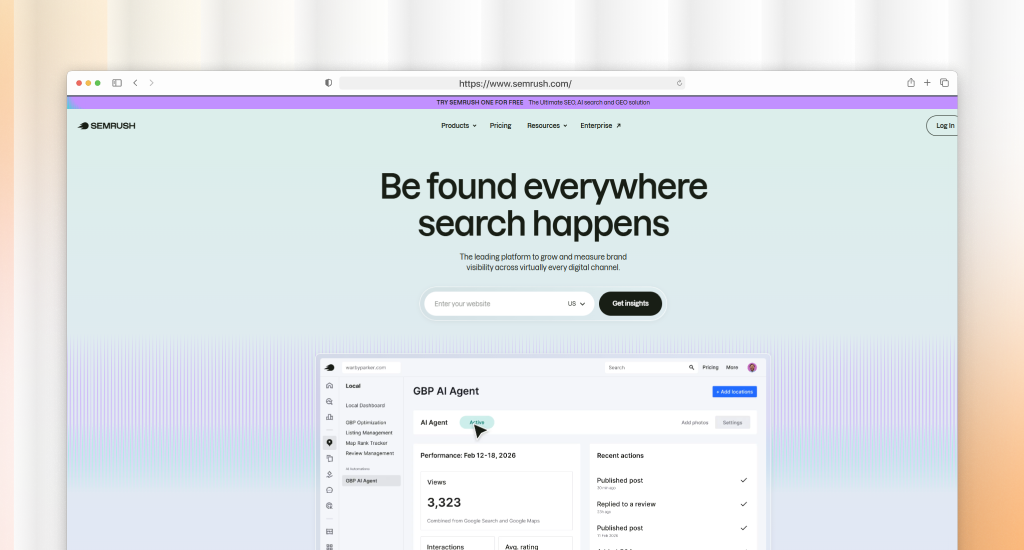
8. Semrush (AI Toolkit)
- Best for: Marketers who want AI visibility data inside a full SEO and marketing platform.
- Features:
-
-
- AI Overview tracking within the Semrush ecosystem
- Brand and competitor AI mention monitoring
- Keyword research and SERP analysis
- Traffic insights and market comparison tools
- AI Toolkit reports for brand exposure
-
- Limitations:
-
- AI Toolkit requires a separate add-on
- Full platform cost can be high for small teams
- Pricing: Pro plan about $139/month, Guru about $249/month, Business about $499/month. AI Toolkit pricing may vary.
Semrush introduced its AI Toolkit to track how brands appear inside modern AI search systems. The feature analyzes brand mentions and compares visibility across several competitors.
The platform usually combines traditional SEO data with AI search insights. This helps marketing teams understand how AI summaries influence keyword rankings and website traffic.
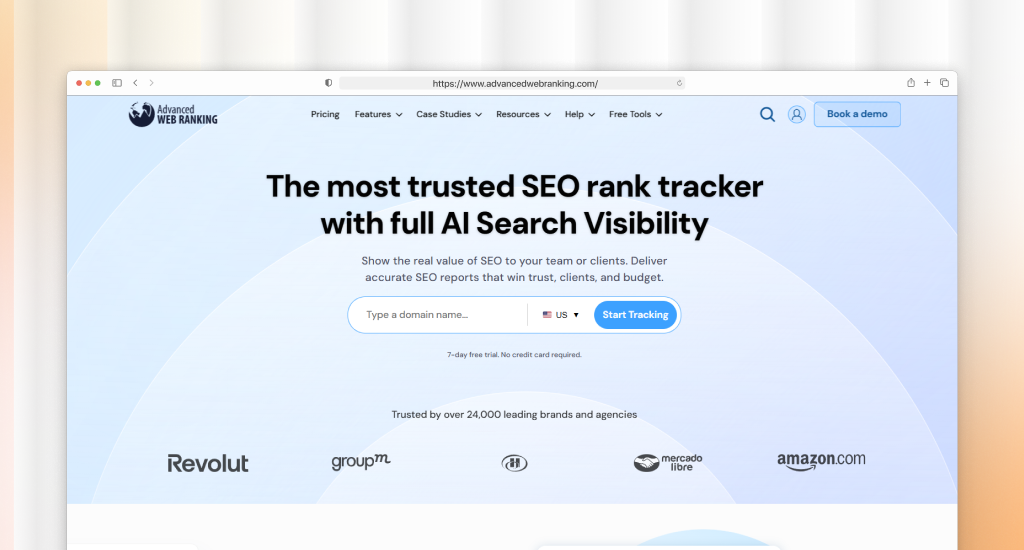
9. Advanced Web Ranking
- Best for: Agencies that need flexible rank tracking with deep SERP analysis.
- Features:
-
-
- Keyword ranking across multiple search engines
- SERP feature tracking, including AI result blocks
- Local and global rank tracking
- White-label reports and API access
- Historical ranking data and trend reports
-
- Limitations:
-
- AI overview tracking features are still limited compared with specialized AI tools
- The interface may require time for beginners
- Pricing: Pro plans are about $139/month, Agency plans are about $279/month, and Enterprise plans are about $699/month.
Advanced Web Ranking focuses on accurate search ranking data across many countries and search engines. Agencies often use this platform because reports support multiple websites and large keyword sets.
The tool records SERP features and ranking history across long periods. These insights help teams analyze search visibility changes and identify new opportunities for website growth.
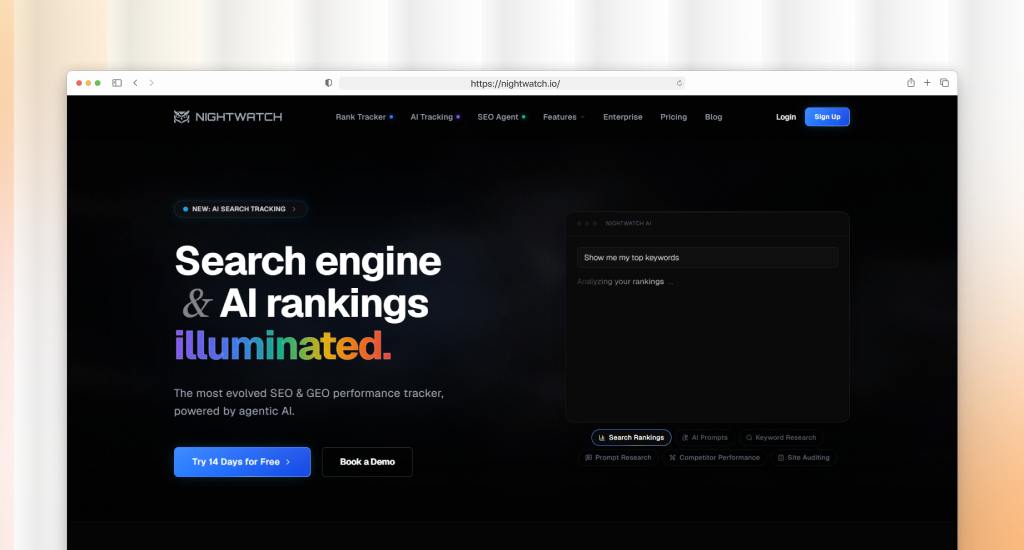
10. Nightwatch
- Best for: Agencies and SEO teams that want precise rank tracking with strong SERP feature analysis.
- Features:
-
-
- Keyword rank tracking across search engines
- SERP feature detection, including AI result blocks
- Local and global ranking reports
- Competitor keyword tracking
- Automated reports and data exports
-
- Limitations:
-
- AI overview tracking features are still limited compared with dedicated AI tools
- Higher keyword limits require larger plans
- Pricing: Starter about $32/month, Optimize about $99/month, Agency plans higher depending on keyword limits.
Nightwatch focuses on accurate ranking data across many locations and devices. The platform records daily keyword positions and detects major search result features across global search markets.
Many agencies prefer the platform because dashboards present ranking trends and competitor data clearly. These insights help teams monitor visibility shifts after major search result changes.
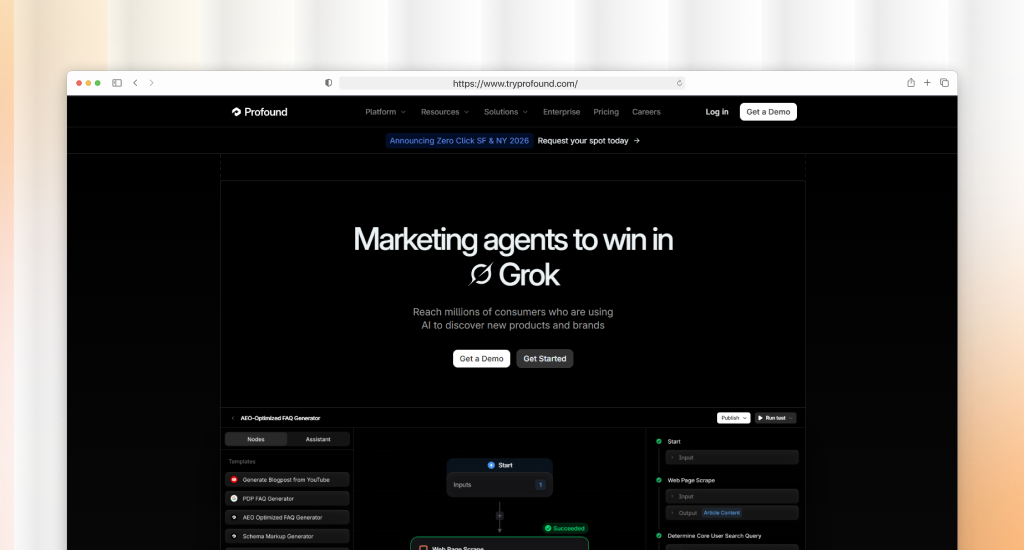
11. Profound AI
- Best for: Brands that want deep insights about AI search visibility and brand perception.
- Features:
-
- AI answer tracking across multiple LLM platforms
- Brand mention monitoring in AI responses
- Prompt analysis and query pattern discovery
- Competitor comparison dashboards
- AI citation and source analysis
- Limitations:
-
- Pricing information not publicly listed
- The platform is designed mainly for enterprise brands
- Pricing: Custom enterprise pricing.
Profound AI focuses on brand presence inside AI-generated answers. The system analyzes prompts across different AI engines and identifies when a brand appears inside responses.
The platform usually measures how AI models describe companies and products. These insights help marketing teams measure brand perception and maintain stronger visibility across modern AI search tools.
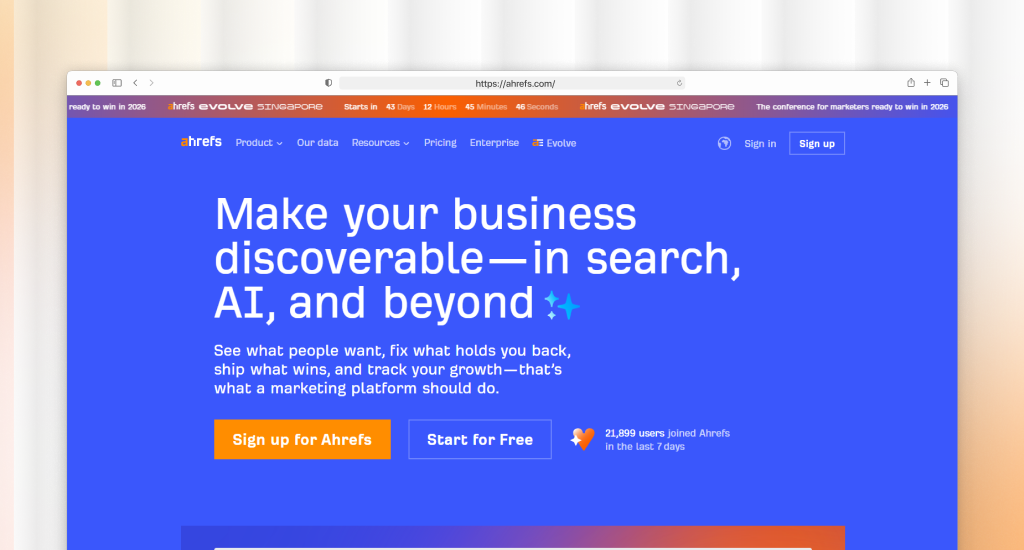
12. Ahrefs Brand Radar
- Best for: Marketing teams that want brand mention tracking inside AI search answers.
- Features:
-
-
- Brand mention detection across AI search platforms
- Competitor brand comparison reports
- AI citation and reference tracking
- Visibility trends across prompts and keywords
- Data export and reporting tools
-
- Limitations:
-
- Focus mainly on brand monitoring rather than full keyword tracking
- Requires the Ahrefs ecosystem for broader SEO analysis
- Pricing: Ahrefs plans start at about $129/month. Brand Radar availability depends on plan access.
Ahrefs introduced Brand Radar to measure how often AI systems mention a company or product. The tool determines responses across several AI platforms and records citation patterns.
The reports highlight competitor mentions and brand exposure trends across many prompts. These insights help marketers evaluate how AI systems present their brand in search answers.
13. ZipTie.dev
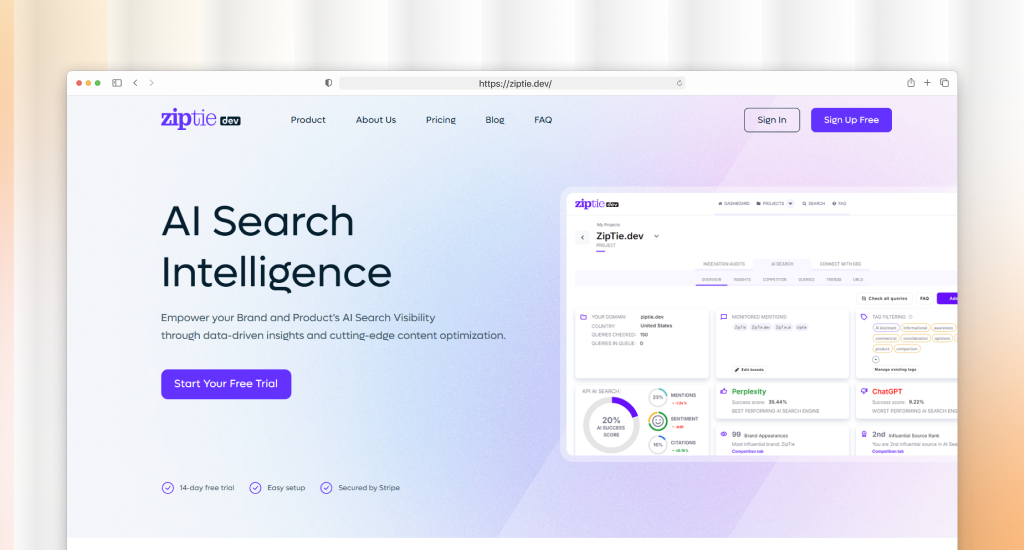
- Best for: Technical SEO teams that want AI search visibility tracking through developer-focused tools.
- Features:
-
-
- AI Overview detection across search results
- Prompt-based visibility monitoring
- Citation source tracking inside AI answers
- API access for custom dashboards
- Data export for technical analysis
-
- Limitations:
-
- The interface may feel technical for beginners
- Smaller feature set compared with full SEO suites
- Pricing: Pricing varies by usage and access level.
ZipTie.dev focuses on AI search monitoring with a developer-friendly approach. The platform records AI citations and identifies which pages appear as sources inside generated answers.
Many teams use the API access to connect the data with internal dashboards. This setup helps analysts study AI search exposure across prompts, keywords, and large datasets.
14. GetMint
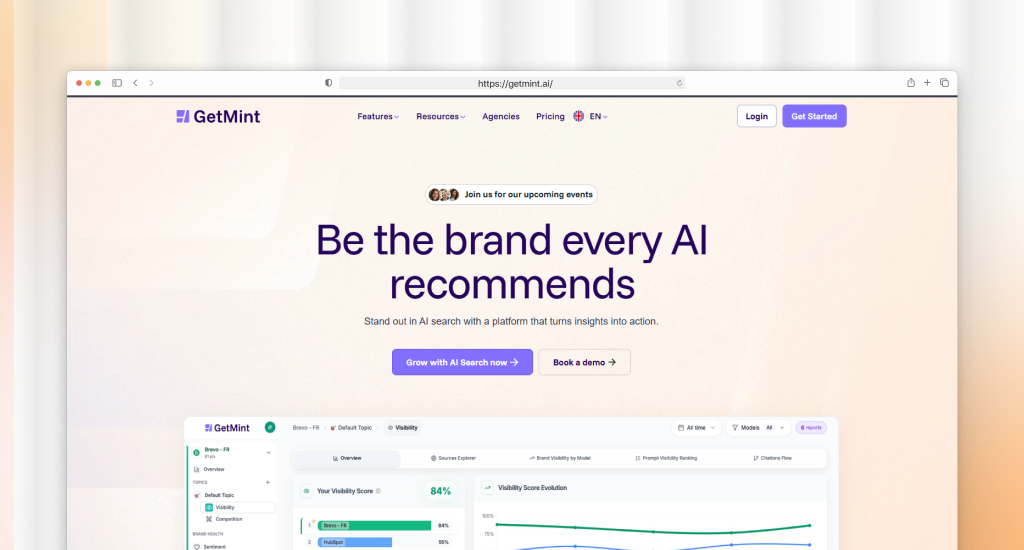
- Best for: Brands that want clear insights about AI search visibility and content performance.
- Features:
-
- AI Overview monitoring across search queries
- Brand mention detection in AI answers
- Competitor exposure comparison
- AI citation tracking and reports
- Content performance insights
- Limitations:
-
- Limited public information about advanced integrations
- Pricing details require account setup
- Pricing: Custom pricing depending on usage and plan.
GetMint focuses on how AI systems present brands inside search summaries. The platform monitors prompts and records when a company or website appears in generated answers.
Reports highlight competitor mentions and citation sources across many AI responses. These insights help teams adjust content strategy and improve brand visibility in AI-driven search.
15. SEOMonitor
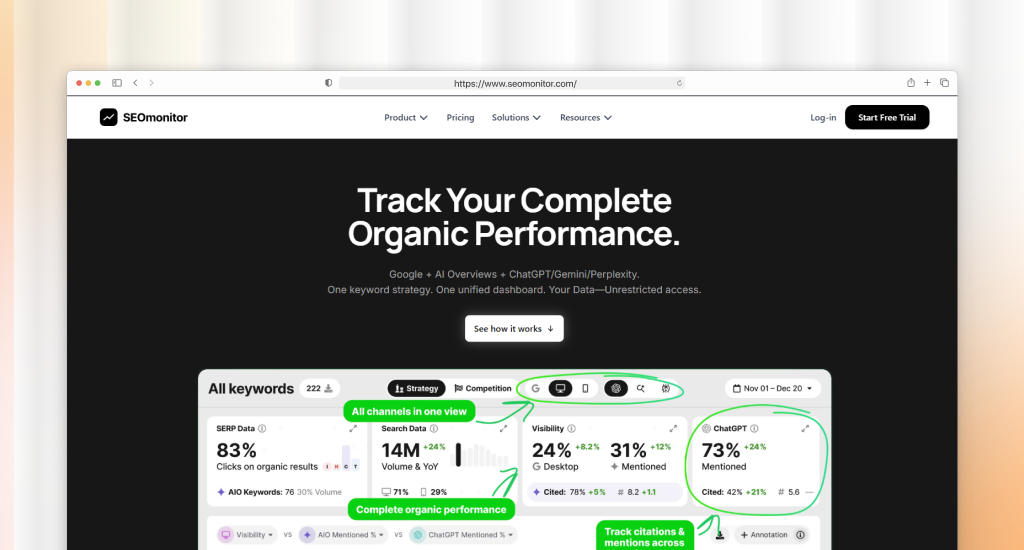
-
- Best for: Agencies that need forecasting, rank tracking, and SEO performance modeling.
- Features:
-
-
- Keyword rank tracking with daily updates
- SERP feature monitoring, including AI elements
- SEO forecasting and opportunity reports
- Competitor tracking and keyword research
- Client reporting dashboards
-
- Limitations:
-
- AI overview tracking is still developing compared with dedicated tools
- Platform mainly designed for agency workflows
- Pricing: Plans usually start around €99/month, depending on keyword limits.
SEOMonitor combines keyword ranking data with forecasting models that estimate traffic opportunities. Agencies often use this platform to plan campaigns and evaluate expected SEO growth.
The system also records SERP feature changes and ranking trends across keywords. These insights help teams analyze how search result updates influence website visibility and traffic patterns.
Key Features to Look for in an AI Overviews Tracking Tool
AI search results now change fast, so website owners need tools with clear and useful features. The best solutions for Google AI overview tracking provide reliable data, simple reports, and broad search engine coverage.
Multi-Engine AI Tracking
A strong tool tracks AI answers across several platforms, not only Google search results.
- Google AI Overviews visibility data
ChatGPT answers citations and mentions - Perplexity search result references
- Claude AI response citations
- Cross-engine exposure comparison
Competitor Benchmarking Framework
Clear competitor data helps website owners understand their position in AI answers.
- Side-by-side domain comparison reports
- Discovery of new AI competitors
- Cross-domain citation mapping inside AI summaries
Organic vs AI Ranking Comparison
A good platform shows both traditional rankings and AI visibility together.
- Standard organic position tracking
- AI summary inclusion checks
- Displacement analysis between organic links and AI blocks
Export and API Capabilities
Teams often need flexible data access for reports and internal tools.
- CSV or Excel data export
- API integration for custom systems
- Enterprise dashboards with shared data access
Real-Time and Scheduled Monitoring
Search pages shift often, so monitoring must stay active and reliable.
- Daily rank updates
- Volatility alerts during SERP changes
- Detection of AI overview blocks through accurate AI overview tracking systems.
Core Metrics AI Overviews Tracking Tools Must Measure
AI Overviews change search visibility very fast. Clear metrics help website owners understand presence, citations, and search impact. The best Google AI overview tracker tools measure several data points across keywords, devices, and regions.
AI Overview Presence Detection
This metric checks if a keyword triggers an AI Overview on Google results. Good tools record device differences between desktop and mobile searches. Geo tracking also shows visibility changes between countries and regional indexes.
Inclusion and Citation Tracking
This data shows which pages appear inside AI summaries. Tools track URL citations and domain inclusion rates. Most AI answers cite six to fourteen sources, with about eight links in many summaries.
Share of Voice in AI Answers
Share of Voice shows how often a brand appears across tracked keywords. Reports show percentage coverage and competitor comparison. Many SEO teams monitor SOV growth through AI overviews and rank tracking on online dashboards.
Visibility Scores and AI Metrics
Many tools create a visibility index that combines citation strength, keyword coverage, and ranking frequency. Volatility charts also show daily or weekly movement across tracked queries.
Prompt and Traffic Impact Insights
AI search relies on conversational queries and long-tail questions. Tracking tools record these triggers and estimate traffic shifts. Studies show click rates may drop between 18% and 60% after AI answers appear.
Can You Track AI Overviews Without Paid Tools?
Basic tracking is possible with free AI overviews and rank tracking, though the process needs manual work and a simple technical setup. These methods help teams test free AI overviews and rank tracking before using a full rank tracking tool.
- Google Tag Manager Detection Setup: GTM can detect page elements linked to AI Overview blocks. Simple triggers send signals to analytics tools.
- GA4 Segmentation Strategy: GA4 segments traffic by landing pages, devices, and search queries. Traffic shifts may hint at AI Overview exposure.
- Manual SERP Sampling: Manual keyword checks also reveal the AI Overview presence. Clean browser searches help reduce personalization effects.
- Limitations of DIY Tracking: Manual methods lack large datasets, competitor data, and stable long-term monitoring.
End Note
AI answers now sit above many search results and influence how people see websites. Because of this shift, brands need accurate AI overviews tracking to measure visibility, citations, and competitor presence inside AI summaries.
The right rank tracking tool AI overviews platform helps marketers understand this new search space clearly. Use the tools discussed in this guide to monitor AI exposure and adjust your SEO strategy with better data.