A small local shop can now use smart tech like a big brand. AI for local businesses helps service owners save time, reduce effort, and serve people better in their daily work. In 2026, this shift feels absolute, useful, and close to home.
AI for local businesses also helps with ads, sales, and customer care. Many owners now see how AI can help local small businesses grow without high cost. Simple AI tools support faster replies, better offers, and clear data for better choices.
In this guide, you will see the impact of AI on local businesses, smart use tips, and risks to avoid. Read this blog to learn how AI fits your local business path.
Key Areas Where AI Is Impacting Local Businesses
AI affects local businesses in very practical ways. It helps automate everyday tasks, saving time and reducing manual work. It also improves customer service, supports more innovative marketing, and makes it easier to make decisions based on real data instead of guesswork.
| Area | Impact on Local Businesses |
|---|---|
| Operational Efficiency | Automates tasks (scheduling, invoicing) to boost productivity by up to 40%. |
| Customer Service | 24/7 chatbots handle bookings and FAQs, improving satisfaction without extra staff. |
| Marketing | Personalizes ads and emails based on behavior to increase conversion rates. |
| Decision Making | Uses data-driven insights and demand forecasting to replace guesswork. |
| Inventory & Supply | Optimizes stock levels and delivery routing to reduce waste. |
| HR & Recruitment | Speeds up hiring by screening resumes and matching candidates to roles. |
| Cybersecurity | Detects real-time threats to protect customer data and reduce fraud risk. |
How AI Helps Local Small Businesses Compete With Larger Enterprises
AI is shrinking the gap between local businesses and large enterprises, giving small teams affordable tools to improve marketing, service, and growth without needing big budgets or costly full-time staff.
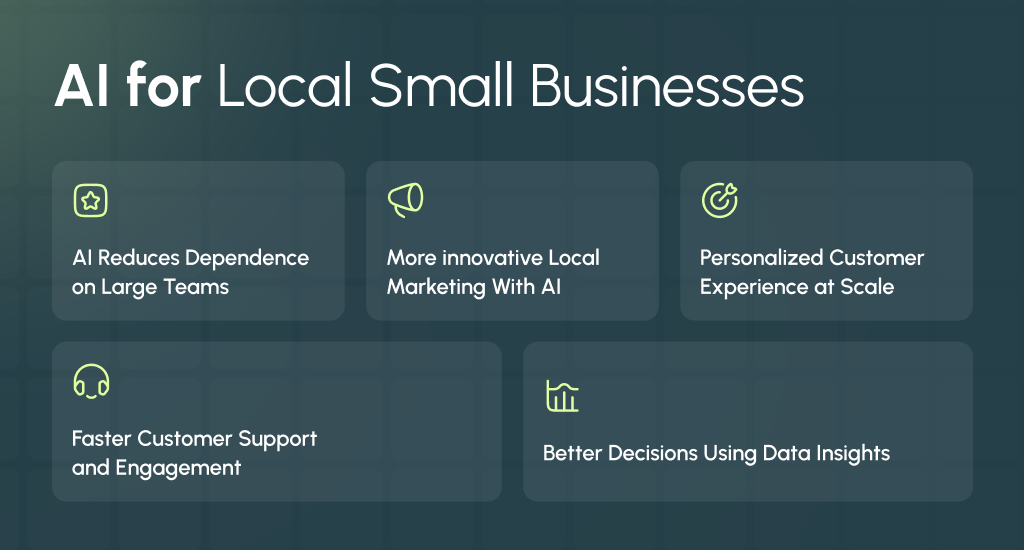
AI Replaces Large Teams
Automation handles marketing, ads, analytics, and daily operations, allowing owners to achieve enterprise-level efficiency, reduce overhead costs, save time, and focus energy on strategy instead of routine tasks and growth.
Personalization at Local Scale
AI analyzes purchase history and customer behavior to deliver relevant offers, recommendations, and messages, helping local businesses maintain personal relationships while serving many customers consistently and accurately every day.
Faster Customer Responses
AI chatbots answer questions instantly, manage inquiries after hours, and support customers without delays, improving satisfaction, building trust, and increasing conversions through consistent, always-available communication across channels and touchpoints everywhere.
Smarter Local Marketing
AI-powered local advertising targets nearby audiences, optimizes campaigns automatically, tracks performance in real time, and helps small businesses compete for attention against larger brands in crowded markets more efficiently locally.
Industry-Specific Examples of AI in Local Service Businesses
AI use changes by industry, but the purpose stays clear. Local services use AI to save time, reduce costs, and improve service quality. These examples show how AI technologies are impacting local businesses and local service work in simple ways.
- Restaurants: Many restaurants use AI to predict busy hours and food demand. It helps plan ingredients and reduce waste. Automated reservation tools also confirm tables, send reminders, and reduce no-shows without staff effort.
- Retail: Local retail stores use AI to suggest products based on past visits or purchases. It really makes shopping feel more personal. AI also helps predict stock needs so shelves stay full without overbuying.
- Healthcare clinics: Clinics use AI to manage appointment schedules and reduce long waiting times. AI also supports basic medical notes and records. Staff spend more time with patients instead of paperwork.
- Beauty salons: Salons rely on smart booking tools that let clients book at any time. AI studies visit history and suggests follow-up visits or services. It helps keep regular clients engaged.
- Repair services: Repair businesses use AI to assign jobs based on distance and urgency. Route planning tools save fuel and travel time. Customers receive faster service and clearer arrival updates.
These examples show how AI automation for service businesses fits into daily local work and supports better service across industries.
Benefits of AI for Local Businesses
AI gives local businesses clear advantages in daily work, sales, and marketing. These benefits support growth, save money, and build trust. Also, they help small teams compete with confidence today.
Higher Efficiency in Daily Work
AI helps teams finish routine tasks faster. Auto replies, smart schedules, and simple reports cut manual work. Owners save hours each week. This extra time goes to service quality, local outreach, and clear business decisions.
Sales Growth Through Personal Touch
AI studies past purchases and visit history. It suggests offers that match real needs and help boost your sales. This personal touch builds interest and trust. Many local brands see higher order value from regular customers.
Lower Staff and Operating Costs
AI tools handle tasks once done by staff. Chat replies, bookings, and reminders run without breaks. Businesses lower wage pressure and training costs. It lets stable service even during busy seasons for small local teams today.
Better Marketing Results
AI improves local ads and messages for better marketing results. It picks the best times, places, and formats based on data. Budgets work harder with fewer guesses. Owners reach nearby buyers with real intent from the local searches.
Stronger Customer Loyalty
Fast replies and accurate help raise trust. AI customer service tools answer common questions at once. Customers feel seen and respected. This steady care supports loyalty and long-term local reputation for small service businesses today.
Revenue Growth With Clear Insight
Time savings, smart sales, and better ads connect to revenue growth. AI helps owners act with facts and not just guesses. Clear insight supports price control, demand balance, and steady income for local service brands each month. However, there is still room for genuine support from human representatives.
Challenges and Negative Impacts of AI on Small Businesses
AI brings value, but it also brings real risks for small teams. The negative impact of AI on business needs care, balance, and clear choices from owners everywhere now.
Cost Barriers for Very Small Businesses
Many AI tools carry monthly fees and setup costs. Very small shops may struggle at first. Hardware, software, and expert help raise costs. Without careful budget control, returns may arrive slower than expected for owners.
Job Role Changes and Workforce Pressure
AI can change job roles within small teams. Some tasks fade while new duties appear. Staff may fear workforce displacement. Owners must explain the purpose clearly and support skill change to keep trust strong locally.
Data Privacy and Customer Trust
AI systems rely on customer data to work well. It raises data privacy risk. A leak can harm trust quickly. Website Maintenance, Security, and Back-up protect customer data when AI tools connect to forms, chat, and payments. Owners must protect the records, follow rules, and choose tools with clear safety terms for users.
Over-Automation Risks
Too much automation can remove the human touch. Local customers value warmth and care. Cold replies may push people away. AI should assist staff, not replace personal service in local shops and community trust.
Ethical Concerns and Bias
AI decisions can reflect bias from past data. It can affect offers or support unfairly. Small businesses must review outputs often and correct errors to stay fair and honest with customers in local markets.
Dependence on AI Tools
Heavy dependence on AI tools brings risk. Outages or errors can stop service. Skills may weaken over time. Owners should keep manual options and basic knowledge ready at all times for local service teams everywhere.
Regional Trends in AI Adoption Among Local Businesses (U.S.)
Across the United States, AI use among local businesses varies by region. These differences are shaped by city size, state support, and how easily small business owners can access affordable AI tools for local service providers.
Urban vs Rural Adoption Gap
Urban areas show faster AI uptake because of strong internet access and dense markets. Rural businesses face limits, yet cloud tools reduce the barriers. Simple AI tools now reach towns that lacked tech support before in many regions.
State-Level Digital Support Programs
Many states run digital support programs for small firms. Grants, skill credits, and pilot tools help owners try AI safely. These state initiatives lower costs and raise trust for local service brands across communities nationwide for growth paths.
Industry Clusters Driving AI Use
Tech hubs and service clusters speed AI spread. Retail zones, food districts, and health centers share tools and tips. Peer success builds confidence and pushes faster AI use within local markets in key states nationwide.
SMB-Focused AI Platforms
SMB focused AI platforms drive access in all regions. These tools offer clear setup, fair prices, and local features. Small teams gain value without tech staff or complex contracts from large vendors and partners nowadays.
Cost and Access Differences by Region
AI access still depends on local cost levels and vendor reach. Some regions face higher software prices or fewer local partners. Low-cost SaaS tools can reduce this gap and help more owners adopt AI steadily.
How Can Local Businesses Start Using AI Today?
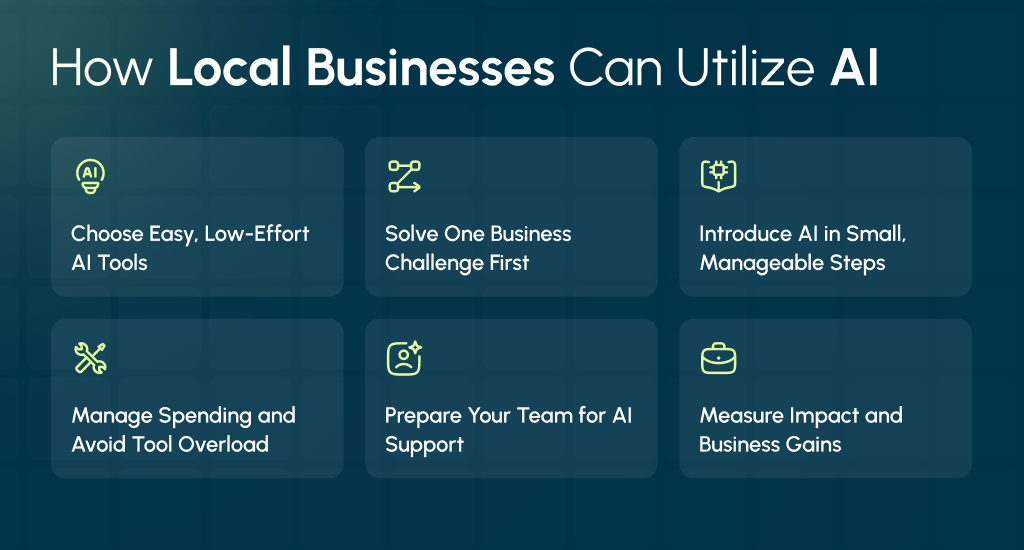
Many owners ask how local businesses can use AI without stress or high cost. The best path starts small, stays practical, and focuses on tools that save time and raise value fast.
Start With Simple AI Tools
Begin with chatbots, basic analytics tools, and automation software. These tools answer questions, track visitor actions, and handle routine tasks. Setup feels simple. Results appear fast. No tech background is required for daily use. A conversion-focused website makes chatbots and automation turn more visitors into leads without extra staff.
Focus on One Clear Business Goal
You should pick one problem first. It may involve late replies or missed leads. Use AI for that single task. Clear focus avoids waste. Small wins build trust and show real value to owners and staff.
Use a Step-by-Step Adoption Path
Try to add one tool at a time. Test results for a few weeks. Learn what works and what does not. Then move to the next task. This step-by-step path keeps control and reduces risk for small teams.
Keep Costs Under Control
Many tools offer low monthly plans. You should start with free trials when possible. Avoid long contracts early. Try to compare features with needs. Smart cost control protects cash flow and avoids tool overload for local businesses.
Train Staff With Simple Guidance
Staff need clear direction, not long lessons. You can show how AI helps daily work. Use short demos and written steps. It builds comfort and reduces fear. Team support keeps AI use smooth and stable.
Track Results and Return Value
You should track time saved, leads gained, and sales growth. Try to use simple numbers. Compare before and after results. It shows the return value clearly. This way, owners can gain confidence and plan future AI use with facts.
Final Thoughts
AI now plays a major role in local success. AI for local business supports daily tasks, sales growth, and better service. Small teams gain speed and clarity without large budgets or complex systems.
From AI automation for service businesses to AI customer service for local businesses, real value really appears fast. Smart tools support better marketing results and help boost your sales. Local owners gain control and confidence.
Challenges exist, yet careful use reduces risk. The impact of AI on local businesses will grow more in 2026. Businesses that act early can stand stronger in a digital market built on speed and trust.